
Breaking News in Europe

Turkey Faces Political Storm Amid CHP Controversy and Police
TURKEY
Turkey Faces Political Storm Amid CHP Controversy and Police Raid Allegations
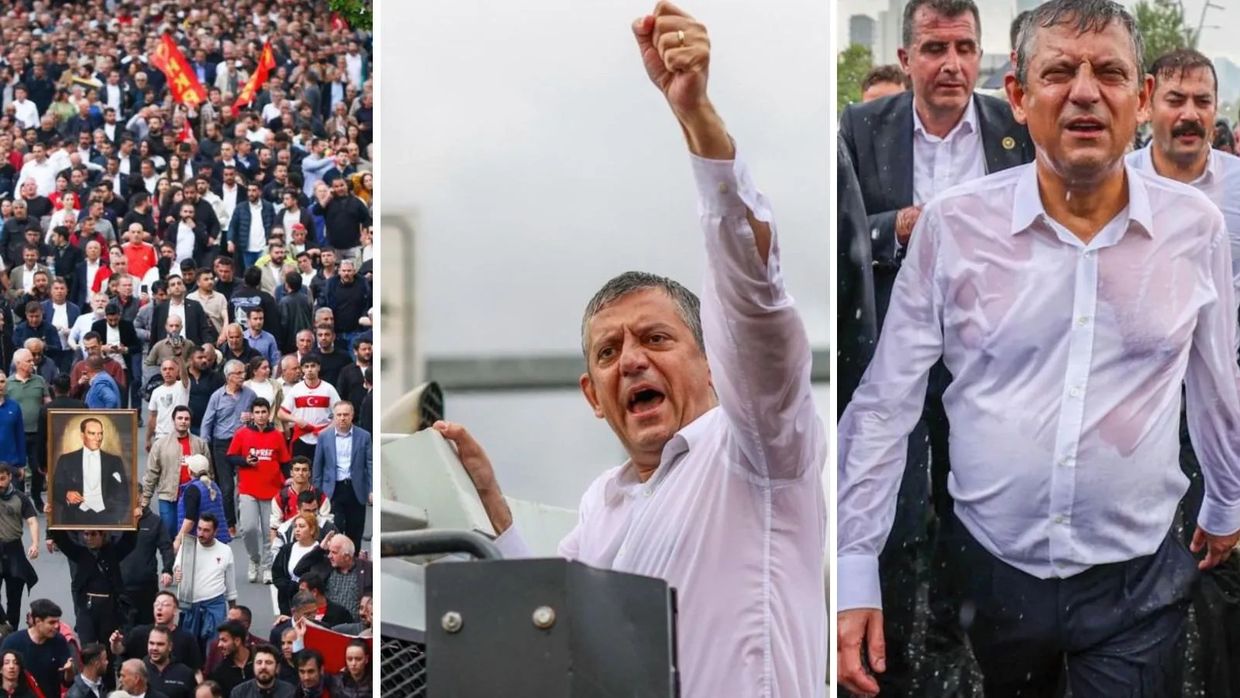
ANKARA — Turkey’s political landscape was shaken this week by growing controversy surrounding claims of a potential legal challenge against the main opposition Republican People’s Party (CHP), alongside reports of a police operation targeting party-related premises.
The developments have sparked intense debate across the country, with opposition figures describing the situation as a serious test for Turkish democracy and the rule of law.
CHP officials condemned what they characterized as increasing political pressure against the opposition, arguing that any attempt to invalidate party decisions through a “mutlak butlan” (absolute nullity) argument or pursue measures that could threaten the party’s institutional status would have far-reaching consequences for democratic representation.
“This is not merely a dispute over party procedures,” one opposition representative said. “It is a matter that concerns democratic legitimacy and the political rights of millions of voters.”
Reports of a police presence at CHP-linked facilities further fueled tensions, prompting criticism from opposition leaders who questioned the timing and purpose of the operation. Government officials, however, maintained that law enforcement activities are conducted within the framework of existing legal procedures and should not be interpreted as politically motivated.
Political analysts noted that the CHP, founded by Mustafa Kemal Atatürk and one of Turkey’s oldest political parties, occupies a central position in the country’s political system. Any legal or administrative action affecting the party would likely have significant political and institutional repercussions.
The controversy has also drawn attention from civil society groups, legal experts, and international observers, many of whom emphasized the importance of transparency, judicial independence, and respect for democratic norms during periods of heightened political tension.
Supporters of the opposition gathered in several locations to express solidarity with the CHP, while government supporters argued that all political actors must remain subject to the law regardless of their status.
As legal debates continue and political rhetoric intensifies, the dispute is expected to remain at the center of national attention in the coming days. Observers warn that the outcome could have lasting implications for Turkey’s democratic institutions, political stability, and the relationship between the government and opposition parties.
For many critics, the unfolding controversy represents one of the most significant challenges to Turkey’s democratic climate in recent years. Government officials, meanwhile, insist that legal processes should be allowed to proceed without political interference.
The coming weeks are likely to determine whether the crisis evolves into a broader constitutional and political confrontation or is resolved through judicial and parliamentary channels.
EUROPEAN UNION AND IRAN

BREAKINGNEWS EUROPEAN UNION AND IRAN
IRAN–U.S. WAR SENDS SHOCKWAVES THROUGH EUROPE: ENERGY CRISIS, INFLATION SURGE, AND POLITICAL DIVIDE DEEPEN
Europe is facing mounting pressure as the escalating Iran–United States conflict disrupts global energy routes and destabilizes economic and political systems across the European Union.
The ongoing war in the Middle East has severely impacted energy flows, particularly through the Strait of Hormuz, leading to sharp increases in oil, gas, and fuel prices across Europe. Economists warn that the sudden spike is fueling inflation, increasing production costs, and placing heavy strain on transportation and industrial sectors. Airlines in several EU countries are reportedly cutting routes and reducing capacity due to rising operational costs.
In response, the European Commission is preparing emergency support measures targeting agriculture, transport, and energy sectors, as farmers and businesses struggle with soaring input costs such as fuel and fertilizers. The economic ripple effect is now being felt across supply chains, raising concerns about long-term stability.
Politically, the crisis has exposed divisions within the European Union. Member states remain split over how to respond, with some calling for diplomatic de-escalation while others maintain closer alignment with U.S. military strategy. Analysts say the lack of a unified EU position is weakening Europe’s global influence during a critical geopolitical moment.
Security experts also warn of broader risks, including potential migration pressures, cyber threats, and regional instability spreading from the Middle East toward Europe’s borders. EU officials have described the conflict as a “strategic threat to European security and stability.”
As the war continues, Europe finds itself caught between economic vulnerability and geopolitical uncertainty, facing one of the most significant external shocks in recent years.
Epstein & European Union
BREAKINGNEWS EPSTEIN EUROPEAN UNION
EPSTEIN FILES TRIGGER RESIGNATION WAVE ACROSS 10 COUNTRIES, 15 HIGH-PROFILE FIGURES STEP DOWN
Following the public release of the files related to the late convicted sex offender Jeffrey Epstein, a widespread political and diplomatic crisis has emerged, triggering a wave of resignations across at least 10 countries. The publication of the Epstein documents has reportedly led to the resignation of 15 senior international figures due to alleged connections with Epstein.
The United Kingdom has experienced the highest number of resignations so far. According to TimesNow News, senior officials including former ambassador Peter Mandelson, adviser Adam Perry, and Prime Minister Keir Starmer’s chief of staff Morgan McSweeney have stepped down amid “increasing pressure surrounding the files.”
In other parts of Europe, including Slovakia, Sweden, and Norway, senior diplomats and government officials have also resigned or been removed from their positions. Reports from TimesNow News claim that former foreign minister and national security adviser Miroslav Lajčák, senior Swedish diplomat Joanna Rubinstein, and Norwegian ambassador Mona Juul were among those who left their posts.
The alleged connections between these officials and Epstein have reportedly triggered multiple official investigations. In the United Kingdom, Prime Minister Keir Starmer has issued a public apology, while British police have reportedly opened inquiries into allegations involving former Prince Andrew, the second son of Queen Elizabeth II.
In Norway, investigations have reportedly been launched into former Prime Minister Thorbjørn Jagland, while senior diplomat Terje Rød-Larsen is also under scrutiny, according to TimesNow News.
In France, former minister Jack Lang has reportedly received an official summons from authorities. Meanwhile, Poland, Latvia, and Türkiye have established special investigative units to examine allegations of human trafficking and potential cooperation involving senior government figures.
The controversy is not limited to Europe. High-profile American figures, billionaires, and political personnel have also been linked to Epstein.
Microsoft co-founder Bill Gates has expressed regret over his meetings with Epstein, stating that he regretted the association and stepping down from his foundation’s board. According to ABC News, Gates described the relationship as “stupid.”
Former U.S. President Donald Trump has reportedly been mentioned approximately 38,000 times in the Epstein files, according to TimesNow News. Trump has dismissed the roughly 3 million documents released by the Department of Justice, stating that the country should move on from the Epstein case.
According to NBC News, members of Congress began reviewing unredacted versions of the Department of Justice files on Epstein
BHT Brings Türkiye’s Earthquake Engineering Expertise to Eur
BHT Brings Türkiye’s Earthquake Engineering Expertise to Europe
BHT Brings Türkiye’s Earthquake Engineering Expertise to Europe
A New Era in Structural Safety, Seismic Intelligence and Earthquake Resilience
ISTANBUL / EUROPE — In an age where earthquakes continue to threaten millions of lives and billions of dollars in infrastructure across the globe, a pioneering Turkish engineering company is preparing to redefine how nations approach seismic safety.
BHT Bina Hasar Tespiti Mimarlık Mühendislik Ltd. Şti., recognized as one of Türkiye’s most specialized earthquake assessment and structural resilience organizations, has officially begun expanding its expertise into Europe after earning recognition for its extensive work following some of the most devastating earthquakes in modern Turkish history.
Founded under the leadership of Ogulturk Ekinci, BHT has emerged as a unique institution focused exclusively on earthquake-related structural analysis, damage assessment, seismic resistance evaluation, building performance testing, and advanced strengthening technologies.
Unlike traditional engineering firms that operate across multiple disciplines, BHT was established with a singular mission: understanding earthquakes, measuring their impact on structures, and protecting human life through scientific engineering solutions.
Engineering Beyond Conventional Construction
Across the world, earthquake-related inspections are typically carried out through government agencies, municipal authorities, universities, or large multidisciplinary engineering groups.
BHT has developed a different model.
The company focuses entirely on the science of structural behavior under seismic stress, creating a highly specialized framework dedicated to:
- Earthquake damage assessment
- Structural performance analysis
- Risk evaluation of existing buildings
- Seismic resistance testing
- Post-earthquake forensic investigations
- Strengthening and rehabilitation projects
- Advanced carbon fiber reinforcement systems
- Structural monitoring and reporting
This specialization has positioned the company as one of the most distinctive organizations operating within Türkiye’s earthquake engineering sector.
Proven Performance During National Disasters
BHT’s reputation was forged during two of the most significant seismic events to impact Türkiye in recent decades.
Following the İzmir Earthquake and later the catastrophic Kahramanmaraş Earthquakes, the company conducted extensive field operations involving the assessment of tens of thousands of damaged structures.
Engineering teams worked under extreme conditions, performing rapid evaluations, detailed structural analyses, and technical reporting processes aimed at determining building safety and future usability.
The company’s work contributed to identifying structural vulnerabilities, determining strengthening requirements, and supporting decision-making processes related to damaged buildings and urban safety.
In many cases, BHT’s technical expertise enabled property owners, institutions, and stakeholders to better understand the true condition of structures affected by seismic activity.
Türkiye’s ongoing efforts to improve earthquake resilience have highlighted the growing importance of independent engineering organizations capable of delivering objective technical evaluations and scientifically grounded assessments.
The Science of Building Resilience
One of BHT’s most notable capabilities lies in its approach to structural strengthening.
Rather than relying solely on demolition and reconstruction, the company has focused heavily on modern reinforcement technologies designed to extend the lifespan and improve the safety of existing structures.
Among these methods is the use of carbon fiber reinforced polymer (CFRP) systems, commonly referred to as carbon fiber strengthening technology.
These advanced materials are increasingly used around the world to improve the load-bearing capacity of structural elements while minimizing additional weight.
Through detailed engineering analysis, BHT develops strengthening solutions aimed at increasing resistance against future seismic events while preserving the integrity of existing buildings whenever technically feasible.
This philosophy reflects a broader shift within global earthquake engineering toward resilience, sustainability, and intelligent rehabilitation rather than wholesale replacement.
A Vision Beyond National Borders
Europe faces many of the same seismic challenges that have shaped Türkiye’s engineering experience.
Countries including Italy, Greece, Romania, Portugal, Spain, and parts of Central Europe remain vulnerable to significant seismic activity.
At the same time, millions of aging buildings across the continent require detailed structural evaluation and modernization to meet contemporary safety standards.
BHT’s arrival in Europe represents more than geographic expansion.
It signals the transfer of knowledge gained through direct experience in one of the world’s most earthquake-active regions.
The company brings with it expertise developed through real-world disaster response, field engineering, structural diagnostics, and building rehabilitation efforts conducted under some of the most demanding conditions imaginable.
Independent Expertise in a Critical Field
What makes BHT particularly noteworthy is its emphasis on independent technical assessment.
As discussions surrounding urban resilience become increasingly important worldwide, the need for objective and scientifically rigorous structural evaluations continues to grow.
Governments, insurers, investors, municipalities, property owners, and legal institutions all require reliable information regarding the true condition of built environments.
BHT’s methodology centers on producing detailed engineering reports, technical analyses, and structural evaluations intended to provide decision-makers with a clear understanding of risk and performance.
This independence has become one of the company’s defining characteristics.
Leadership Focused on Public Safety
Under the leadership of Ogulturk Ekinci, BHT has consistently emphasized a mission that extends beyond engineering calculations.
The company’s philosophy is rooted in a simple but powerful principle:
Every building examined, every structural weakness identified, and every strengthening project completed has the potential to save lives.
As climate uncertainty, urban density, and infrastructure risks continue to challenge cities around the world, organizations capable of combining technical excellence with practical field experience are becoming increasingly valuable.
A Turkish Success Story with Global Potential
BHT’s expansion into Europe represents a significant milestone not only for the company itself but also for Turkish engineering expertise.
At a time when nations are investing heavily in disaster preparedness and infrastructure resilience, the company stands as an example of how specialized knowledge developed through experience can evolve into an internationally relevant model.
From post-earthquake investigations to advanced structural reinforcement systems, BHT is positioning itself as a new voice within the global conversation on seismic safety.
Its mission remains clear:
To understand earthquakes before they become tragedies, to strengthen structures before they fail, and to help build safer cities for future generations.
For more information, visit:
Breaking news from the European Union ( NATO )
La Nostra Missione
BREAKING NEWS – EUROPE & GLOBAL AFFAIRS
Rising Tensions Reported Between the European Union and NATO Over Strategic Security Direction
Brussels / Brussels HQ – April 2026 — Tensions are reportedly increasing between the European Union (EU) and the North Atlantic Treaty Organization (NATO) as disagreements emerge over defense strategy, burden-sharing, and long-term security planning across Europe.
Diplomatic sources indicate that the friction is not a formal institutional crisis, but rather a growing strategic divergence between EU policymakers and NATO leadership regarding Europe’s future defense architecture.
Defense Spending & Burden Sharing Disputes
At the center of the disagreement is the issue of defense spending commitments among European allies.
NATO officials have repeatedly urged member states to meet or exceed the 2% of GDP defense spending target, arguing that European security relies heavily on collective military readiness.
However, several EU member states and European Parliament voices are reportedly pushing for a more independent European defense capacity, including:
- Expansion of EU defense funding mechanisms
- Joint European military procurement programs
- Greater autonomy in crisis response operations
This has led to concerns within NATO that overlapping EU defense initiatives could create duplication of structures and weaken alliance unity.
Strategic Autonomy Debate Intensifies
Within the European Union, the concept of “strategic autonomy” has gained momentum. Supporters argue that Europe must be able to act independently in global crises without relying entirely on external military structures.
Critics within NATO, however, warn that such moves could:
- Fragment Western defense coordination
- Create inefficiencies in military planning
- Reduce NATO’s central role in European security
Diplomatic officials stress that both institutions remain formally committed to cooperation, but acknowledge that policy priorities are increasingly diverging.
Transatlantic Concerns
The United States, as NATO’s leading military power, is reportedly monitoring the situation closely. Washington has emphasized the importance of maintaining NATO cohesion, particularly amid ongoing global security challenges in Eastern Europe and the Middle East.
US officials have reiterated that European defense initiatives should complement, not replace, NATO structures.
No Formal Crisis – But Growing Friction
Despite rising rhetoric, officials from both sides insist there is no institutional breakdown. Instead, analysts describe the situation as a “managed tension” reflecting evolving geopolitical realities.
A senior EU diplomat stated:
“This is not a conflict, but a conversation about the future of European security.”
Expert Analysis
Security analysts suggest the tensions reflect a broader shift in global politics, where Europe is seeking a stronger independent role while still relying on NATO’s established military framework.
Experts warn that without careful coordination, the overlap between EU defense ambitions and NATO responsibilities could become a long-term strategic challenge.
Outlook
Upcoming NATO and EU defense meetings are expected to address these concerns directly. Both sides are under pressure to clarify their roles and prevent further institutional friction.
For now, cooperation continues—but the debate over Europe’s defense future is clearly intensifying.
HUNGARY ELECTIONS BREAKING NEWS EUROPEAN european countries

Major political shift in Hungary
🇭🇺 Major political shift in Hungary
In the parliamentary elections held in Hungary, the Tisza Party led by Péter Magyar reportedly won the vote.
As a result, Viktor Orbán’s 16-year rule has come to an end.
The Tisza Party secured a parliamentary majority strong enough to potentially amend the constitution.
🇪🇺 Reactions across Europe
European leaders described the outcome as an “important turning point for democracy.”
New leader Magyar stated that Hungary aims to strengthen relations with the European Union.
The change is seen as a significant shift in the EU–Russia–NATO geopolitical balance.
Wider European context
European media are framing the result as a major pushback against right-wing populism.
The political transformation in Hungary is considered one of the most influential developments shaping EU internal political dynamics.
BREAKING NEWS EU FRANCE - GERMANY - SPAIN

France – Latest update
Spain PM & Trump – Latest short news
Germany – Migration latest update
France – Latest update
France has announced the recruitment of 500 additional staff to speed up processing delays for residence permits (carte de séjour). The move aims to reduce long waiting times and clear the growing backlog of applications affecting foreign residents, students, and workers.
Recently:
- There have been delays of several
France – Latest update
France has announced the recruitment of 500 additional staff to speed up processing delays for residence permits (carte de séjour). The move aims to reduce long waiting times and clear the growing backlog of applications affecting foreign residents, students, and workers.
Recently:
- There have been delays of several months in processing applications
- Thousands of foreign workers and students are being affected
- Local prefectures are under heavy workload and pressure

Germany – Migration latest update
Spain PM & Trump – Latest short news
Germany – Migration latest update
Germany – Migration latest update (sort)
Germany is continuing to tighten and restructure its migration and asylum system in 2026 as part of a wider EU reform plan.
Key points:
- Border controls have been increased and asylum procedures are being speeded up.
- The government is expanding the use of “safe country of origin” lists, which makes i
Germany – Migration latest update (sort)
Germany is continuing to tighten and restructure its migration and asylum system in 2026 as part of a wider EU reform plan.
Key points:
- Border controls have been increased and asylum procedures are being speeded up.
- The government is expanding the use of “safe country of origin” lists, which makes it harder for some asylum claims to succeed.
- EU-wide asylum reform (GEAS) is being implemented to create a more uniform and faster system across Europe.
Spain PM & Trump – Latest short news
Spain PM & Trump – Latest short news
Spain PM & Trump – Latest short news
Spain PM & Trump – Latest short news
Spanish Prime Minister Pedro Sánchez has openly criticized U.S. President Donald Trump’s foreign policy, especially over military operations and NATO-related tensions.
Trump has responded by threatening trade measures against Spain after Madrid refused to support certain U.S. military actions.
The disput
Spain PM & Trump – Latest short news
Spanish Prime Minister Pedro Sánchez has openly criticized U.S. President Donald Trump’s foreign policy, especially over military operations and NATO-related tensions.
Trump has responded by threatening trade measures against Spain after Madrid refused to support certain U.S. military actions.
The dispute highlights growing tensions between Spain’s pro-multilateral stance and Trump’s more confrontational approach to European allies.
AIR FRANCE BREAKING NEWS EU
AIR FRANCE
For passengers requiring rerouting via alternative hubs, VisaHQ Turkey may help expedite additional visa requirements such as transit visas for Greece or other countries. The platform’s France portal (https://www.visahq.com/france/) allows users to complete applications online, track their status in real time, and access expert support, enabling mobility teams to focus on coordination and operational tasks.
The aircraft carrier service initially aimed to resume flights on March 15, but the French DGAC aviation risk unit extended the suspension after raising threat levels for certain areas in the Gulf and Damascus regions. This delay is complicating mobility planning for corporate travel managers. Passengers already booked on affected routes may rebook or request refunds, but seat availability on alternative carriers is limited due to peak Easter travel demand. Air France reports rerouting core loads via Amman and Jeddah through partner airline Saudia, although codeshare capacity remains limited. Insurance providers have also adjusted risk matrices: companies sending personnel to Saudi Arabia via Paris may see war-risk surcharges added to policies. Meanwhile, teams assigned to suspended routes are being reassigned to high-demand transatlantic services, where capacity is expected to be strained due to EES-related delays. Looking ahead, Air France is conducting a continuous 48-hour security review. Mobility teams are advised to monitor the airline’s travel advisory portal and consider emergency routing via Istanbul or Athens. If the suspension extends into the third week of April, service-level agreements for time-critical operations may be impacted, potentially triggering force majeure clauses.
BREAKING NEWS – European Parliament
BREAKING NEWS – European Parliament
BREAKING NEWS ARTICLE – EUROPEAN PARLIAMENT
Title: European Parliament Moves to Increase EU Budget Amid Major Policy Debate
Brussels, April 2026 — The European Parliament has approved a key negotiating position on the European Union’s long-term budget, marking a significant step in ongoing talks over the bloc’s financial and strategic priorities.
Members of the European Parliament (MEPs) have backed a proposal calling for an increase of approximately 10% in the EU’s next Multiannual Financial Framework (2028–2034) compared to the European Commission’s initial plan. Lawmakers argue that additional funding is necessary to address rising geopolitical, economic, and technological challenges facing the Union.
Budget Priorities
According to the Parliament’s position, increased EU spending should focus on:
- Strengthening European competitiveness and industrial capacity
- Expanding investment in defense and security cooperation
- Supporting climate action and green transition policies
- Protecting agriculture funding and regional development programs
MEPs also emphasized that repayment costs related to the EU’s post-pandemic recovery fund should be managed separately from core budget allocations in order to safeguard long-term investment programs.
Political Negotiations Ahead
The decision now moves into negotiations with EU member states, where discussions are expected to be highly contested. Governments are likely to debate the size of the budget, funding sources, and spending priorities.
A final agreement must be reached through joint negotiations between the European Parliament, the European Commission, and the Council of the European Union.
Outlook
The European Parliament’s position signals growing political pressure for a stronger and more flexible EU budget, reflecting concerns over global competition, security risks, and economic stability.
Further negotiations are expected in the coming months as EU institutions work toward a final budget agreement.
www,breakingnewseu.com
EUROPEAN COURT OF HUMAN RIGHTS BREAKING NEWS EU
BREAKINGNEWS EU COURT OF HUMAN RIGHTS APRIL 2026
Latest developments (April 2026)
The European Court of Human Rights (ECHR) has released updated statistics on pending applications involving Turkey and other countries.
According to the data, there are approximately 58,950 pending cases at the Court, and Turkey ranks first in the number of applications received.
Applications from Turkey represent a significant portion of the total caseload (around 35–38%).
Current high-profile case
In addition, the ECHR has given priority to the application regarding Ekrem İmamoğlu’s detention and has requested a response from the Turkish government.
This case has become one of the most discussed matters due to the Court’s formal questions to Turkey.
Summary
The most recent “breaking” developments are:
- ECHR statistics (Turkey remains first in total applications)
- Fast-tracked review of the İmamoğlu case
- Ogulturk Ekinci has also submitted an individual application to the European Court of Human Rights via his legal representative.
However, no major final judgment (such as a violation ruling or release order) has been issued recently, and the processes are still ongoing.
Added clarification
Turkey currently ranks first in the number of applications to the European Court of Human Rights, which is often discussed in the context of a high number of alleged human rights violations cases brought before the Court.